
The Potentials of a Business Analyst
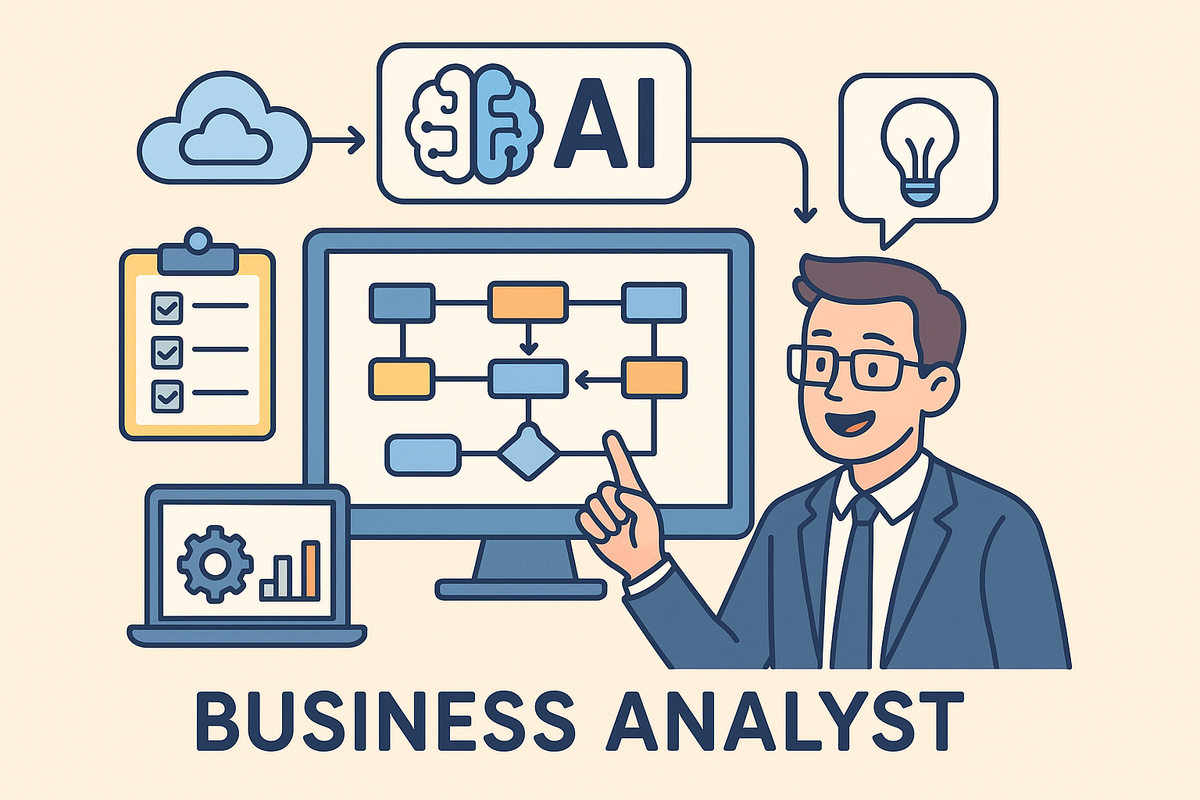
1. Translators Between Business and Technology
Business Analysts convert business needs into technical requirements, ensuring that what engineers build actually drives measurable value.
- They help organizations avoid wasted tech spending by aligning AI, automation, and data initiatives with clear business outcomes.
- In AI projects, BAs define use cases, success metrics, and workflows that make AI adoption practical — not just experimental.
2. Drivers of Digital Transformation
With industries moving toward AI, automation, and analytics, BAs play a crucial role in:
- Mapping “as-is” vs. “to-be” processes to identify where automation or AI can add the most value.
- Prioritizing digital investments and helping leadership teams justify ROI.
- Acting as change agents who help users adapt to new technologies.
3. Champions of Data-Driven Decision Making
While data scientists build models, BAs contextualize data insights — turning technical findings into business recommendations.
They help teams answer:
- “So what does this data mean for our revenue, operations, or customer retention?”
- “Which metrics should we track to measure business impact?”
BAs thus turn data into strategy — an increasingly critical skill in companies swimming in dashboards but starving for insight.
4. Foundational Role in AI Transformation
In the AI era, BAs evolve into AI Business Analysts or AI Product Strategists, with focus on:
- Identifying feasible Applied AI Use Cases (e.g., fraud detection, logistics optimization, personalized marketing).
- Writing clear AI requirement documents that balance business needs, data availability, and ethical AI use.
- Helping teams evaluate AI tools (e.g., GenAI copilots, workflow builders) and measure productivity improvements.
5. Cross-Functional Influence
BAs collaborate across teams:
- With Executives: to prioritize initiatives based on business goals.
- With Data Teams: to validate data pipelines and ensure data integrity for decision-making.
- With Engineers: to translate business processes into system requirements.
- With End Users: to ensure solutions are usable and relevant.
This cross-functional role gives them strong visibility and leadership potential — many successful Product Managers, Strategy Leads, and Digital Transformation Heads start as Business Analysts.
6. Future Career Evolution
As digital ecosystems expand, BAs can evolve into:
- AI Strategy Consultant – identifying and mapping AI opportunities for businesses.
- Product Owner / Product Manager – owning and managing digital solutions from concept to delivery.
- Business Intelligence Lead – specializing in analytics and data storytelling.
- Process Automation Expert – leading RPA or AI workflow optimization initiatives.
In Summary
The Business Analyst is no longer just a requirements writer — they are the strategic translator that ensures every AI or digital transformation initiative creates measurable business value.